Why “dollar store” doesn’t mean every item costs one dollar
“Dollar store” is a handy shorthand, but it doesn’t guarantee a single fixed price for every item. Learn the practical reasons prices vary and how to compare value when shopping.
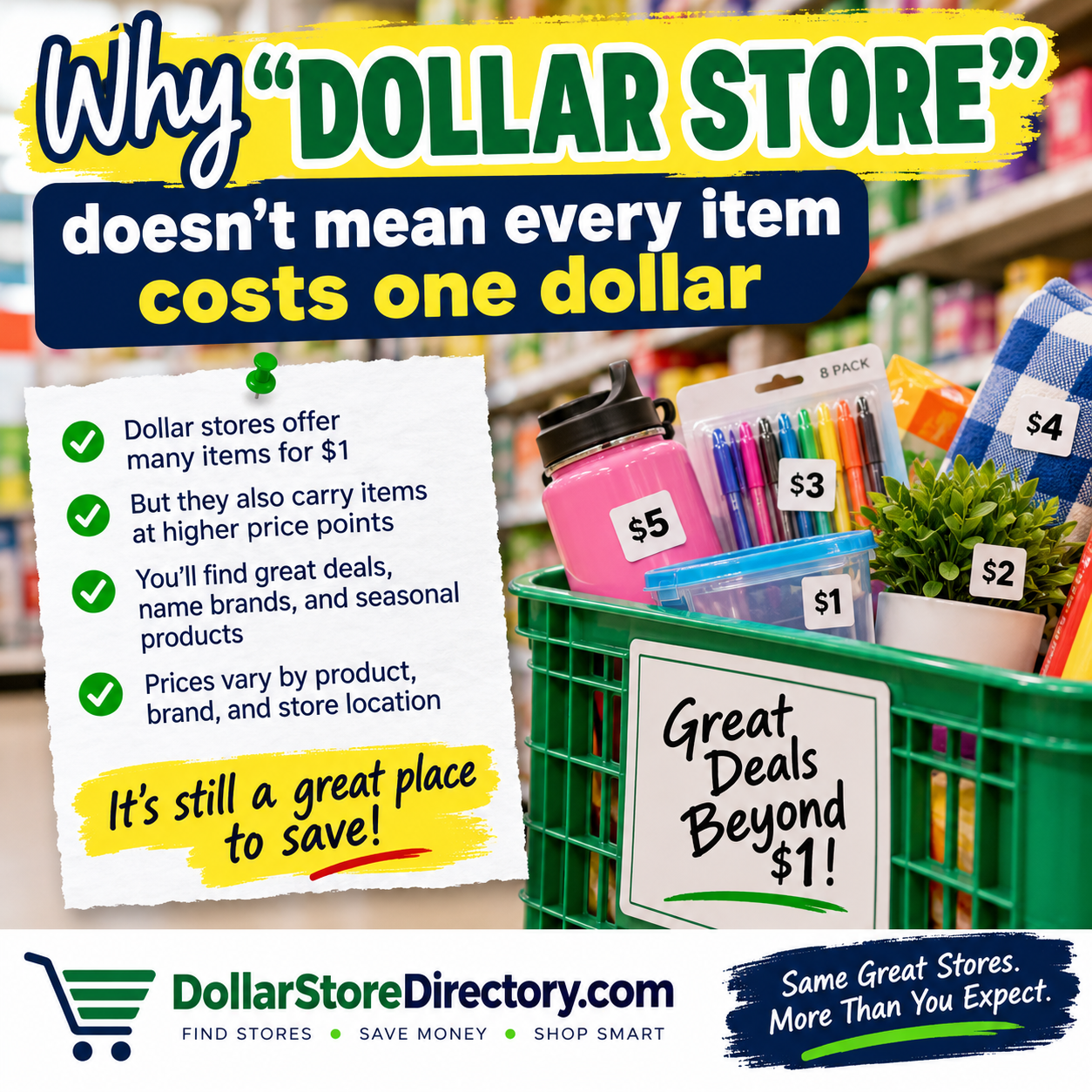
What people mean by “dollar store” — and why it’s just shorthand
The phrase "dollar store" is a common, convenient way to describe shops where many items are sold affordably. As a short label it reflects a shopping expectation, not a universal pricing rule. In practice, stores that use the term or offer low-cost merchandise operate under different business models, source products differently, and display multiple price points on their shelves.
How retail reality creates multiple prices
Several practical reasons explain why not every item in a so-called dollar store carries the same sticker price:
- Diverse business models: Some shops pursue a strict single-price model; others use a multi-tier approach with items priced at different fixed amounts or variable prices. The store name doesn’t force one approach across the industry.
- Product variety and package sizes: The cost of a single-serving item differs from a multi-pack or a larger container. Stores may stock both small, inexpensive formats and larger value packs with higher shelf prices.
- Different suppliers and sourcing: Retailers buy from many manufacturers, closeouts, and importers. Variations in supplier costs affect the final retail price even for visually similar products.
- Private-label vs. national brands: Private-label items are often priced differently from national brands due to manufacturing, packaging, and exclusivity. The presence of both creates price variation on the same shelf.
- Regional and local factors: Rent, local taxes, labor costs, and transportation can differ by location, so the same retailer in different areas may show different prices for similar items.
- Promotions, clearance, and inventory turns: Discounts, temporary markdowns, and clearance pricing change how items are priced on any given day. Sales cycles and inventory age play a role.
- Quality and intended use: Two items that look similar may use different materials, ingredients, or manufacturing processes — and that affects price. Durability, formulation, or features influence cost even when packaging is comparable.
Why a single-price rule would be hard to maintain
Maintaining one fixed price for every item in a store is operationally difficult and often undesirable for retailers. A single price limits flexibility for buying in bulk, responding to supplier cost changes, introducing premium lines, or clearing seasonal inventory. It can also reduce a store’s ability to adapt to local market conditions.
Inventory and SKU complexity
Large stores carry thousands of SKUs (unique product identifiers). Each SKU has its own cost structure. Adjusting every price to a single number would mean changing package sizes, reformulating products, or accepting inconsistent profit margins — none of which are practical for most retailers.
How this affects shoppers — and how to shop smarter
Knowing why prices vary helps you make more informed choices. Here are concrete, practical steps to compare value when you shop in stores labeled as "dollar" or low-cost retailers.
- Check the unit price: Look for a unit-price label (price per ounce, per count, per yard, etc.). If a unit price isn’t posted, calculate it yourself by dividing the total price by the usable quantity.
- Compare package quantities: A smaller package may have a lower sticker price but a higher cost per unit. Look at net weight, piece count, or dimensions to compare like with like.
- Read ingredients and product specs: For consumables and household items, ingredient lists, materials, and stated performance matter. Lower sticker prices can come with tradeoffs in quality or longevity.
- Consider intended use: If you need something for heavy use, a slightly more expensive item with better durability can be more cost-effective over time.
- Watch shelf labels and signage: Stores often label items clearly when they’re part of a promotion, a pack, or a special assortment. Signage can reveal whether a price is per item, per pack, or promotional.
- Ask questions if it’s unclear: Team members can sometimes point out whether an item is a single unit, a multipack, or on clearance. (Policies and staffing vary across stores.)
Quick formula to compare unit price
unit_price = total_price / quantity
Use the formula above with consistent units (ounces, count, meters, etc.). If the package shows metric and imperial measures, convert to the same unit before comparing.
When a higher sticker price can still be a better deal
It’s common to assume the lowest sticker price is the best value, but that’s not always true. Examples of situations where a higher price may still be a smarter buy:
- Better ingredient or material quality that reduces waste or replacement frequency.
- Larger pack sizes with a lower unit cost that require a higher upfront spend.
- Items designed for a different use case (e.g., professional-strength vs. household-strength) that justify a different price point.
Resources to build sharper comparison habits
If you want step-by-step help comparing package sizes, unit cost, or product attributes, our site includes practical guides to make comparisons easier. For example, see the article on how to calculate unit price and compare value when shopping, and the guide for comparing package sizes and ingredients before you buy.
You might also find it useful to read retailer-specific evaluation tips when comparing large chains and independents. If you prefer shopping at independent stores, that category is covered separately as well.
How to Calculate Unit Price and Compare Value at Dollar Stores and Other Retailers
How to Compare Package Sizes, Ingredients, and Unit Costs at Dollar Stores
Independent Dollar Stores
Bottom line
“Dollar store” is shorthand for a style of low-cost retailing, not a promise that every item is sold at one exact price. Differences in sourcing, package size, business model, local costs, and product attributes create multiple price points within and between stores. By checking unit prices, package details, and intended use, you can identify which items genuinely offer the best value for your needs.