Which Product Attributes to Compare When Deciding If an Item Offers Good Value
Before you buy, compare the attributes that determine long-term value: intended use, unit cost, size and concentration, materials and build quality, ingredients and safety, longevity and maintenance, and hidden ongoing costs. Use a quick checklist and simple unit-price math to make faster, smarter decisions.
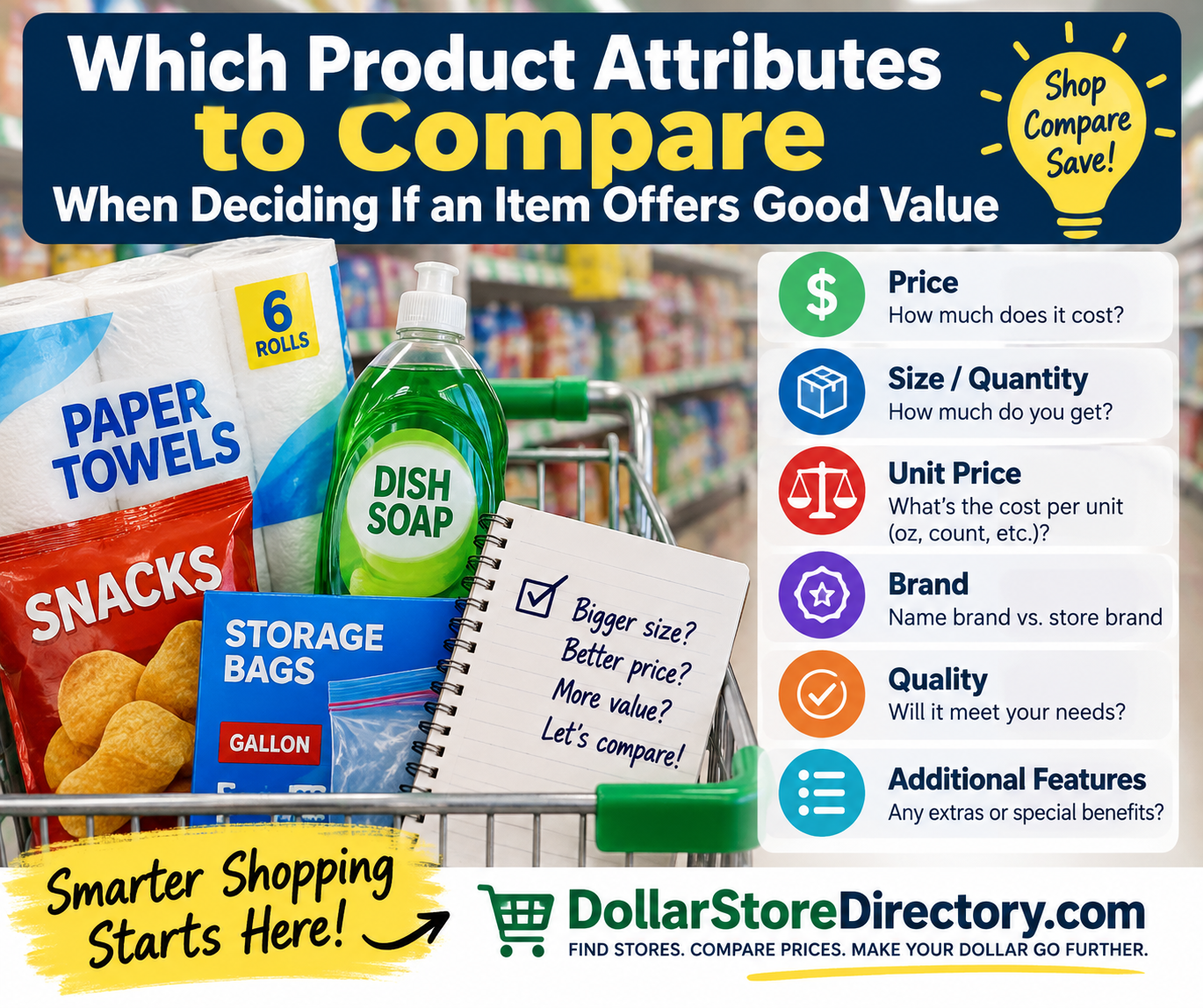
Price tags are easy. Value is not. Two items with the same price can deliver very different value depending on how you use them, how long they last, and what they require after purchase. This article runs through the key product attributes to compare so you can make faster, more reliable choices at dollar stores, discount retailers, or any shop.
Start with intended use and frequency
Ask how you’ll use the item and how often. Is it a one-off party decoration, a daily kitchen tool, or a seasonal item? The more often you use something, the more weight you should give durability, performance, and long-term cost per use.
Buying the cheapest option can be economical for occasional use, but for frequent use a slightly higher up-front cost can be better value if the item lasts much longer.
Price vs. unit cost
A sticker price alone rarely tells the whole story. Unit cost lets you compare items sold in different sizes or counts by converting them to a consistent measure.
Simple formula (use for weight, volume, or count):
unit price = total price ÷ number of units (or ounces, or milliliters)
Examples of unit measures you might use: price per ounce for food, price per count for batteries, price per load for laundry detergent (using ounces or recommended dose), or price per square foot for shelf liner. Calculating unit cost helps you compare the real cost when package sizes differ.
When concentration matters (cleaners, detergents), compare cost per usable diluted volume, not just per bottle.
For more detail on unit-price calculations and examples, see How to Calculate Unit Price and Compare Value at Dollar Stores and Other Retailers.
Package size, quantity, and concentration
Look beyond box counts. A larger package isn’t always cheaper per use if content quality or concentration is lower.
- Check net weight or volume on the label, not just package dimensions.
- For concentrates, determine how much diluted product each bottle yields when mixed as directed.
- Consider whether multipacks include excess packaging or single-use portions that change the effective per-use cost.
Materials, construction, and performance indicators
For non-food items, small visible clues can predict performance and lifespan.
- Look at materials: thickness of plastic or fabric, metal gauge, seam quality.
- Inspect fastenings: glued joints versus screws, type of stitching, reinforced corners.
- Search for specs: weight ratings, temperature tolerance, thread count, or denier for fabrics when available.
If you can’t determine construction quality in-store, think about the cost of replacement. Frequent replacements add to lifetime cost even if each purchase is cheap.
Ingredients, allergens, and safety information
For consumables and personal-care items, ingredient lists, active ingredient concentrations, and allergen warnings matter as much as price.
- Compare active ingredient percentages for medications and cleaners — a higher concentration can mean fewer doses or more diluted product for the same task.
- Read nutrition/ingredient labels to confirm formulations match your needs (allergens, sodium, added sugars, preservatives).
- Check safety symbols and usage instructions for potentially hazardous items.
Durability, warranty, and returnability
Some inexpensive items carry return restrictions or no guarantee. If an item is likely to fail quickly, a store’s return policy can affect value.
- Ask or look for printed return or satisfaction information on packaging or receipts.
- Consider whether the manufacturer or retailer offers a warranty; even a short replacement policy can improve value.
Hidden and ongoing costs
Think beyond the purchase price. Hidden costs include required accessories, batteries, fuel, assembly tools, special cleaning supplies, or increased utility use.
- If a product needs batteries, factor in expected battery life and replacement cost.
- Appliances and electronics may have energy costs — even small items can add up over time.
- Low-quality tools that require frequent replacement or professional repair rarely save money long-term.
Compatibility and replacement parts
A product that requires proprietary replacements or rare parts can become costly. Favor items with common-size parts or easy-to-find consumables.
Environmental and disposal impacts
Disposal and sustainability can affect long-term value for some shoppers. Single-use items may be cheaper today but create ongoing disposal or replacement costs.
- Reusable options often cost more up front but reduce repeated purchases and waste.
- Check whether materials are recyclable or compostable where you live; disposal fees or inconvenience reduce value for some buyers.
Practical in-store or online comparison steps
- Identify the most important attribute for your use (durability, price per use, ingredient content, portability).
- Calculate unit price using the code formula above when sizes differ.
- Scan labels for active ingredients, allergen warnings, or concentration instructions.
- Compare materials and construction cues for non-food items; if unsure, choose the item with clear specifications or a better return policy.
- Factor in accessories, batteries, or disposable components needed immediately after purchase.
Quick shopper’s checklist
- Intended use & frequency: occasional vs daily.
- Unit cost: price per ounce, count, or use.
- Size/concentration: how much usable product you get.
- Ingredients/materials: active percent, allergens, fabric/plastic quality.
- Durability & warranty: expected lifespan and return options.
- Hidden costs: batteries, parts, energy, disposal.
- Compatibility: standard or proprietary consumables.
- Environmental disposal: reuse, recycling, or landfill impact.
When a lower price is the better value
Lower price wins when the item is truly disposable by design, you expect minimal or limited use, or when unit cost and performance meet your needs. Even then, verify concentration and ingredients so you’re not buying a lower-quality product that requires more product to do the job.
When to pay more
Pay a bit more when durability, safety, or reduced ongoing cost matters. Spending more up front for a longer-lasting item often reduces total cost per use and avoids the time and inconvenience of frequent replacements.
For step-by-step walkthroughs on related topics, see additional guides like How to Compare Package Sizes, Ingredients, and Unit Costs at Dollar Stores for detailed label checks and dilution examples.
Comparing these attributes doesn't need to be slow. Keep the checklist on your phone, do a quick unit-price calculation, scan labels for key details, and factor in likely replacement or accessory costs. Over time those few extra seconds of comparison add up to better purchases and less waste.