How to Evaluate Dollar General and Dollar Tree Without Assuming Prices or Policies
A practical, retailer-neutral method shoppers can use to compare Dollar General and Dollar Tree at the local level. Focus on measurable product and store attributes you can check in person or online, plus a step-by-step checklist for making fair comparisons.
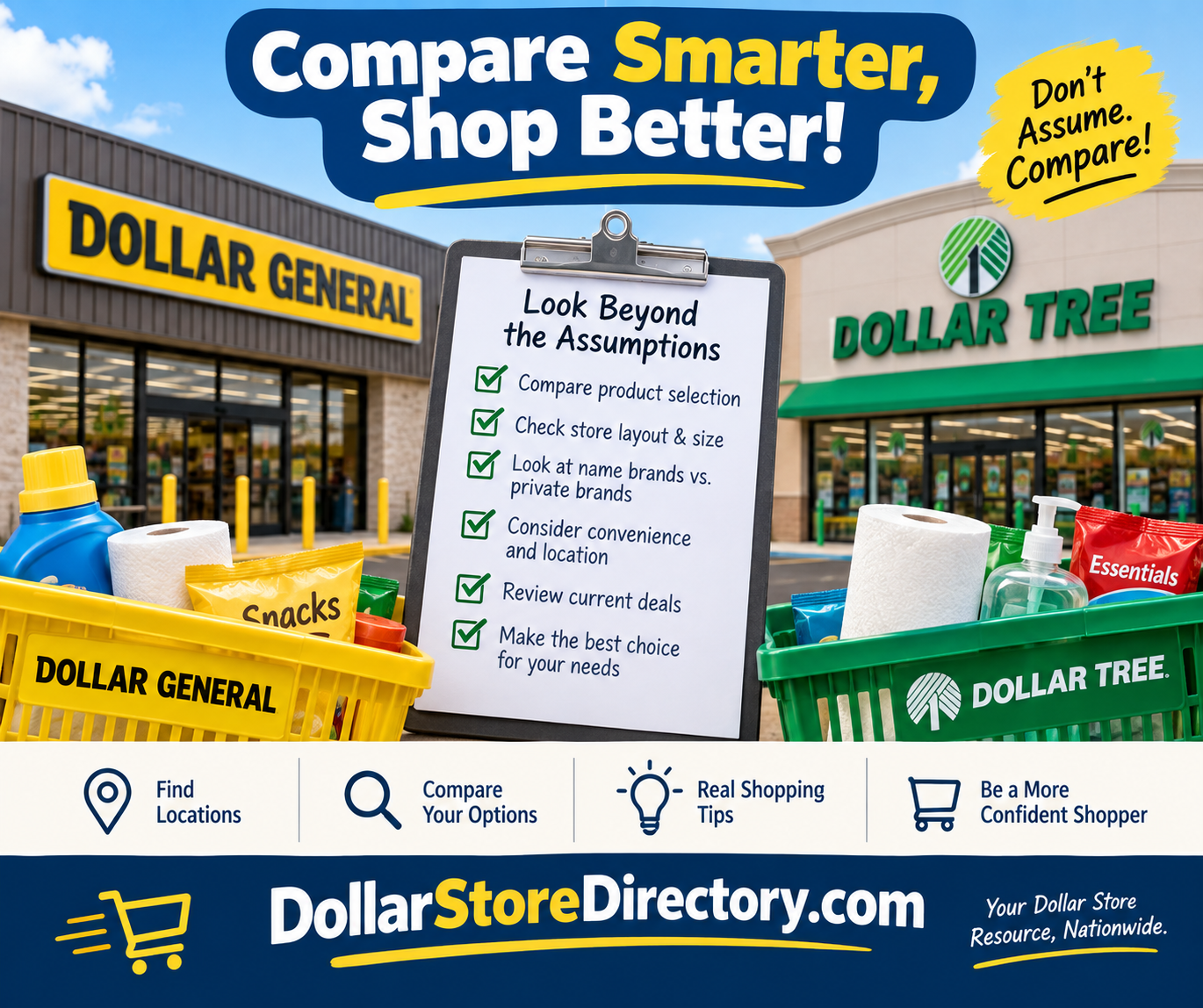
This article helps you compare two large dollar-store brands in a neutral, repeatable way without relying on assumed price points, inventories, or corporate policies. Use the same tests at both stores so your decisions are based on measurable facts you can confirm yourself.
Start with a clear comparison plan
Before visiting stores, decide what you care about most: low cost per use, ingredient safety, durability, brand preference, or convenience. That focus tells you which attributes to measure and which compromises you’re willing to accept.
Gather standard comparison tools
- Phone notes or camera: photograph packaging and shelf tags (where allowed) to compare later.
- Calculator: to compute unit prices and per-use cost.
- Checklist: a short list of attributes you’ll inspect for every product.
- Time: allow a few extra minutes in each store to read labels and compare sizes.
What to inspect on every product
Use this standardized list so you can compare apples-to-apples across stores.
- Package size and quantity: note the net weight, volume, or unit count. Size differences are the most common source of misleading price comparisons.
- Unit price: calculate cost per ounce, per count, or per use. If a shelf tag doesn’t show unit price, compute it from the total price and package size.
- Ingredient or material list: compare active ingredients, preservatives, fiber content, or fabric type depending on the product category.
- Labels and certifications: look for independent seals (e.g., allergen warnings, safety marks), manufacture dates, or expiration dates when applicable.
- Country of origin and brand name: note manufacturer vs. private label and where the item was made, if listed.
- Packaging integrity: check seals, tamper-evidence, and whether the product feels intact.
How to compare non-food and household items
- Evaluate durability claims: if the product is a reusable item (e.g., cleaning tools, utensils), look at materials and construction.
- Check return or satisfaction options: read posted in-store information or ask staff how returns are handled—don’t assume a policy.
- Test safe use: for small purchases you’re unsure about, buy a single unit to test at home before committing to larger quantities.
How to compare food and personal care items
- Compare ingredient lists: order ingredients by weight and look for common allergens or unwanted additives.
- Check nutrition and serving sizes: serving sizes can vary; base comparisons on nutrient-per-gram or nutrient-per-serving metrics you normalize across products.
- Look at best-by or expiration dates: shorter remaining shelf life can affect value, especially for perishable items.
Store-level factors that matter
Beyond the item itself, the shopping experience and local store options influence value.
- Selection breadth: note whether the store stocks a wider range of sizes, brands, or specialized items you use regularly.
- Stocking consistency: observe how often shelves are empty or full during different visits, then compare over time rather than by a single snapshot.
- Cleanliness and organization: tidy, well-signed stores make it easier to find comparable items and spot unit pricing information.
- Payment and convenience options: check whether a store supports your preferred payment method, or offers pickup/online ordering in your area—verify locally and don’t assume availability.
Make fair price and value comparisons
To avoid misleading conclusions, follow the same calculation steps for both stores:
- Normalize by unit: convert price to price per ounce, per sheet, per count, or per serving—whichever matches how you use the product.
- Adjust for performance: if a larger item lasts significantly longer, calculate cost per expected use (e.g., washes, uses, servings).
- Factor in travel/time: if one store is consistently more convenient, factor the time or fuel cost into your value calculation.
How to test quality without excessive risk
- Start small: when trying a new brand or private-label product, buy the smallest reasonably sized package to evaluate quality first.
- Document differences: keep receipts and note any differences in performance, taste, scent, or longevity.
- Use a scorecard: assign simple scores (for example, 1–5) for appearance, performance, packaging, and overall satisfaction, then compare averages across stores.
Compare promotions and price changes responsibly
Promotions, clearance events, and changing inventory can affect perceived value. Instead of assuming how often promotions run, note the date and context of any sale items and repeat your checks later to see whether the deal recurs.
How to use online and store resources
Before or after a visit, consult official brand pages for general information and verified links to local store pages. For brand-level context, see the Dollar General and Dollar Tree pages in the directory and consider independent local options to broaden your comparison.
Keep your approach repeatable
Good comparisons are repeatable and documented. Use the same checklist and scoring method each time you compare stores, and revisit decisions after several purchases to confirm a pattern rather than relying on a single shopping trip.
Quick checklist to take into the store
- Decide the primary comparison metric (unit cost, ingredient quality, durability, etc.).
- Record package size and compute unit price for each item.
- Photograph or note ingredient lists and expiration/manufacture dates.
- Inspect packaging integrity and labeling claims.
- Buy a small test quantity when uncertain; track performance over time.
- Repeat the same checks at each store for a fair comparison.
Using consistent, measurable checks instead of assumptions gives you control over which retailer provides better value for your specific needs. The DollarStoreDirectory public directory currently contains 592 active, approved, indexable records that can help you locate local stores and brand pages as a starting point for comparisons.